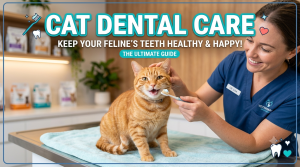
Oliver’s Story:
The Unhappy Cat Living in a flat in Manchester, Emma had a six-year-old cat named Oliver. The cat was a bit of a picky eater, but she had never worried about it. He would come to his bowl, smell his usual chicken kibble, and walk away. Then, he would come back to the bowl and, instead of nibbling each piece, he gnawed at it, dropping several pieces on the floor. He would sit by his food bowl, meow for a while, and then wander off to the other side of the sofa.
One day, she decided to take him to the vet. As the vet lifted his upper lip to look at his mouth, she saw that the cat’s back molars were covered in gray tartar, his gums were inflamed, and one of his lower teeth had a severe cavity. It seems that Oliver was not being picky about his food; he was in constant pain.
This situation is familiar to many cat owners. Due to the cats’ fear of appearing weak, many cats will hide their dental pain. If you have wondered about your cat’s sudden foul odor or how to clean your cat’s teeth, you can learn a lot from this article.
Dental Care in Cats – Why Owners Often Miss It
Asking a cat owner about their pet’s dental hygiene is similar to asking them about their routine for visiting a dentist. For many, it does not rank very high. In fact, most vets say that by the age of three, a cat has a 70 percent chance of developing some form of periodontitis.
In the wild, cats often eat fresh meat, which helps clean their teeth. Domesticated cats, on the other hand, eat soft food or kibble. The remnants of food combine with the bacteria on the cats’ teeth to form plaque. This biofilm needs to be removed within 48 hours, or it will harden into calculus, also known as tartar.
The development of tartar leads to gingivitis, which progresses into periodontitis. Tartar that develops on the tooth root leads to abscesses. Tartar on the gum provokes the inflammation of the periodontium and causes the teeth to loosen. Additionally, each episode of cat periodontitis can lead to bacteria in the bloodstream, damaging the heart, liver, and kidneys. This is how plaque transforms into calculus, tartar, gingivitis, periodontitis, and other dangerous conditions:
Feline Dental Resorption – A Hidden Dental Disease
Unfortunately, cats have a unique condition known as Feline Tooth Resorption. Similar to cavities in humans, this disease provokes the loss of tooth minerals from the inside. The enamel wears away, exposing the sensitive nerve roots of the teeth. Due to the strong instincts to survive, cats do not show their discomfort and pain.
Because of their wild instincts, cats continue to act normal even when they have severe dental pain. They seem to be more vocal and affectionate as they try to hide their discomfort. A cat with dental disease may continue to purr and sit on your lap as if nothing is wrong, while in reality, its mouth hurts severely.
Symptoms of Dental Disease in Cats – What to Look For
You can start by checking your cat’s mouth for the following signs:
• Foul odor from the mouth. While a cat’s breath is usually not pleasant, it should not smell strongly of metal, sour, or rotten food.
• Difficulty eating. Your cat may refuse to eat, chew on one side of the mouth, tilt its head, or drop food.
• Drooling. Saliva may have a pinkish or bloody consistency.
• Pawing at the face or rubbing its face against objects.
• Red and bleeding gums. Gums should be pale pink and not inflamed.
• Yellow or brown crusts on the back molars.
• Changes in behavior. The cat may become withdrawn, spend more time hiding, sleep more, and groom less frequently.
Keeping Your Cat’s Mouth Healthy – At-Home Care
The best way to prevent plaque from transforming into calculus and tartar is to brush your cat’s teeth daily. Believe it or not, most cats tolerate the procedure well if they are introduced to it early and rewarded for their cooperation. Here are the basic rules of brushing a cat’s teeth:
• Do not use human toothpaste. Human toothpaste contains xylitol and other sweeteners that are toxic to cats. Do not use baking soda, as it irritates the cat’s mouth.
• Choose an enzymatic toothpaste in a flavor your cat enjoys. Most pet toothpastes come in chicken, beef, or malt flavor.
Week 1: Getting Familiar With the Taste
Put a small amount of pet toothpaste on your finger and let your cat lick it off. Do this every day for a week. Do not attempt to touch the cat’s mouth yet. After a week, your cat will associate this tasty substance with a positive experience.
Week 2: Getting Familiar With the Feeling of the Tongue on the Tongue
Lift your cat’s lip and gently rub your finger along the outside of his gums for 3 to 5 seconds. Immediately reward him with points and some special treats.
Week 3: Using a Finger Brush to Cleanse the Teeth
Slide a silicone brush on your index finger and gently rub the outside of your cat’s upper back teeth. You only need to clean the outside of the teeth as the tongue usually cleans the inner parts. Do this for a few seconds so that your cat associates this activity with a reward.
Week 4: Using a Small Cat Toothbrush
Once your cat gets accustomed to this new step, you can move on to a small cat toothbrush. Use a thin pet toothbrush to clean the outside of the upper back teeth in a circular motion. Spend about 30 to 45 seconds on this step. Aim to brush the cat’s teeth at least once a day, or three times a week, if possible.
Alternatives to Brushing a Cat’s Teeth
If your cat has refused to let you brush his teeth, do not force him. There are several other options for controlling plaque buildup:
• Dental diets for cats. These special kibble textures help remove plaque by making the cat chew longer and harder. The extended chewing process scrapes off the plaque.
• VOHC-approved dental treats. Look for a VOHC logo on the packaging. VOHC stands for Veterinary Oral Health Council. This organization ensures that the product has undergone laboratory testing and proven to reduce plaque and tartar.
• Water additives. These usually come in a liquid form and are designed to be added to your cat’s drinking water. The product removes plaque and tartar and keeps the breath fresh.
• Enzymatic gels. You can apply this product to the cat’s gums to remove plaque and reduce bacteria.
Cleaning Cat’s Teeth in a Professional Vet Clinic
While at-home care is essential, it can only go so far. Tartar, calculus, and plaque must be removed by a professional vet. A cat dental cleaning works similarly to a human cleaning. It requires a full set of procedures under anesthesia.
COHAT – Comprehensive Oral Health Assessment and Treatment
It is not unusual for pet owners to request an “anesthesia-free” dental cleaning for their cats. However, awake cleaning does not address the main causes of dental disease. Tartar removal under anesthesia is the only way to properly address plaque and treat periodontitis. Under anesthesia, a vet can do the following:
• Take digital x-rays. Approximately 60 percent of a cat’s tooth surface is located below the gum line. Taking x-rays helps identify any abnormalities affecting the root.
• Ultrasonic scaling – this procedure removes calculus and plaque both above and below the surface of the gum.
• Polishing – smoothing of the tooth surface removes microscopic irregularities, preventing plaque buildup.
• Tooth extraction – removing broken teeth that pose an infection risk.
Cost of Cat Dental Cleaning
In the US, a professional cleaning of a cat’s teeth can vary from $300 and $1,000 per procedure, depending on the number of extractions. In the UK, the cost is usually in the range of £200 – £700. Regular oral exams help detect problems early, reducing the costs of treatment.
Quotes From Dr. RK Bloch, BVSc & AH, MVSc in Animal Nutrition
“I love seeing cats recover from dental procedures. One of the most fulfilling parts of my job is seeing pet owners return two weeks after their cat’s dentistry appointment. They say things like, ‘I didn’t know that he was in so much pain, I thought he was just getting old.’
In my experience, cats suffer in silence. They do not like to show that they are sick or hurt in any way. Therefore, it is up to us, the owners, to make sure that they get their teeth cleaned regularly. I recommend you start by checking their mouths at home. You might be surprised how cooperative they can be. You can also try brushing their teeth as well as using dental treats. By doing this, you can significantly prolong your cat’s life.”
FAQ
How often should my cat get a dental exam?
A cat’s mouth should be checked by a vet at least once a year during a routine exam. Older cats or those with a history of dental disease require biannual exams.
Are raw bones suitable for cleaning a cat’s teeth?
Avoid giving your cat raw bones. They can hurt their teeth, cause choking, and intestinal blockage. Instead, give your cat flexible dental treats that have been tested and approved by the VOHC.
Why does my cat’s breath smell fishy or rotten?
A cat’s breath should not smell strongly of fish or rot. The smell may indicate the presence of bacteria, periodontitis, abscess, or kidney disease. See your vet to identify the cause of the foul odor.
What should I do if my cat becomes agitated when I try to clean his?
Avoid forcing your cat to let you clean his teeth. If your cat refuses to let you do this, use alternative methods for controlling plaque and tartar. Daily dental treats, special diet, or water additives can reduce the risk of dental disease.
Are some breeds of cats more likely to develop dental disease?
Yes, cats with short faces, such as Persians, Exotic Shorthairs, and Himalayans, are more likely to develop periodontitis due to the shape of their jaws. Maine Coons, Siamese, and Abyssinian cats are also prone to this condition.
Reference lists
1. American Animal Hospital Association. (2019). AAHA Dental Care Guidelines for Dogs and Cats.
2. Bellows, J. (2010). Feline Dentistry: Oral Assessment, Treatment and Prophylaxis. Wiley-Blackwell.
3. Ingham, K. E., Gorrel, C., & Blackburn, P. (2002). Retrospective study of the effect of a dental diet on periodontal disease in cats. Journal of Veterinary Dentistry, 19 (4), 188–192.
4. Perry, R., & Tutt, C. (2015). Periodontal disease in cats: Back to basics. Journal of Feline Medicine and Surgery, 17 (1), 45–56.
5. Verstraete, F. J., & Lommer, M. J. (2012). Oral and Maxillofacial Surgery in Dogs and Cats. Saunders Elsevier.