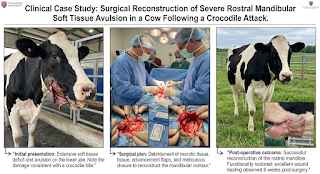
Traumatic facial injuries sustained by livestock due to predator or wildlife attacks present as acute surgical emergencies in field veterinary practice. Bites from large aquatic predators like crocodiles often induce severe crushing, tearing and avulsion forces on soft tissues, often resulting in large open wounds, profuse hemorrhage, heavy bacterial contamination and anatomical distortion. Preservation of the lower jaw (rostral mandible) and lip function is critical in large animals like cattle for feeding and survival. Timely surgical closure and reconstruction of anatomical soft tissues is essential for restoring lower jaw functionality and minimizing life-threatening secondary infection or necrosis.
1. Case History & Clinical Presentation
An adult cow was presented with severe traumatic injury to lower jaw from a crocodile attack.
On presentation, the animal exhibited:
Extensive Soft Tissue Avulsion: The skin, subcutaneous tissue and oral mucosa surrounding the rostral lower jaw were completely torn away from the underlying mandibular bone creating a large gaping open wound.
Profuse Hemorrhage: Active bleeding from damaged facial blood vessels and torn mucosa.
Heavy Contamination: The wound site was heavily contaminated with mud, debris and oral bacterial flora.
Inability to Prehend Feed: Severe pain and anatomical displacement of the lower lip rendered the animal unable to grasp grass or fodder.
2. Clinical Evaluation & Triage
Following detailed physical examination to evaluate the underlying rostral mandible for fractures, though the soft tissues were extensive and severely avulsed, the main bony structure of the mandible remained intact. Given the fresh nature of the wound and viable underlying tissue margins, immediate surgical reconstruction was planned under local anesthesia and physical restraint to preserve tissue viability and reconstruct the rostral jaw profile.
3. Dr.’s Clinical Perspective
🩺 Facial Avulsion & Tissue Reconstruction Clinical Rationale:
“Facial and mandibular injuries in cattle require immediate intervention. The goal for rostral avulsions is to prevent tissue desiccation and necrosis while eliminating heavy contamination from wildlife bites. Copious antiseptic lavage followed by surgical debridement of non-viable tissue is mandatory. Re-establishing anatomical alignment through layered suturing not only restores lower lip function for feeding but also protects the exposed mandibular bone from developing osteomyelitis.”
4. Surgical Technique & Reconstruction Protocol
1. Restraint & Aseptic Preparation: The cow was securely restrained in standing/recumbent position. The traumatized facial area was clipped, washed and prepared under aseptic surgical conditions.
2. Local Anesthesia: Local infiltration of 2% Lignocaine Hydrochloride was performed around the margins of the avulsed wound and mental nerve region to provide complete regional analgesia.
3. Debridement: The wound was copiously flushed with warm normal saline and povidone-iodine solution to remove debris and bacterial load. Shredded and severely contaminated tissue edges were debrided to expose fresh healthy vascular margins.
4. Surgical Reconstruction: The deep oral mucosa and muscle layers were apposed first using absorbable suture material (e.g. Chromic Catgut / Polyglactin 910) to eliminate dead space and restore internal lip structure.
The outer skin margins were meticulously aligned and closed using non-absorbable suture material (e.g. Nylon / Silk) in a tension-relieving mattress pattern to accommodate post-operative swelling.
5. Post-Operative Care & Recovery Management
Systemic Antimicrobial & Anti-Inflammatory Therapy: Broad-spectrum parenteral antibiotics were administered to prevent deep-seated bacterial infection while non-steroidal anti-inflammatory drugs managed pain and localized edema.
Supportive & Fluid Therapy: Parenteral fluid support and multivitamin injections were given to counteract stress and blood loss.
Nutritional & Feeding Management: Strict instruction was given to the owner to provide soft mash, gruel and fine chopped fodder during the early recovery phase to minimize tension on the sutured lower jaw.
Wound Hygiene: Daily topical antiseptic application was performed. The animal responded exceptionally well to treatment with smooth tissue healing, gradual wound union and full restoration of feeding function.