1. Introduction
Acute hypersensitivity reactions in animal patients exist on a clinical spectrum spanning mild, localized cutaneous allergic response to severe acute, anaphylactic shock (Tizard, 2020).
Anaphylactic shock is precipitated by antigen exposure rapidly resulting in IgE mediated degranulation of systemic mast cells and basophils, culminating in release of large quantities of histamine, leukotrienes, and pro-inflammatory cytokines into the circulatory system (Silverstein et al., 2021).
This acute surge of inflammatory mediators results in significant systemic vasodilation, capillary permeability, severe hypotension, and bronchospasm (Silverstein et al., 2021).
The ability to delineate between a stable, localized allergic reaction and impending vascular collapse forms the basis of emergency triage (Tizard, 2020).
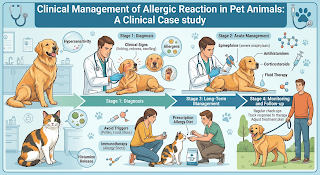
2. Clinical Presentation and Emergency Triage
Severe Anaphylactic Reaction (Critical Shock Phase)
Animals presenting with anaphylactic shock exhibit acute clinical signs necessitating immediate life-saving intervention:
Cardiovascular collapse: severe hypotension, palor/blotchiness of mucous membranes, delayed capillary refill time (CRT > 3 seconds), weak peripheral pulses.
Acute respiratory distress: laryngeal edema, dyspnea, cyanosis, wheezing.
Gastrointestinal and neurological signs: sudden vomiting, profuse hemorrhagic diarrhea, ataxia, sudden recumbency.
Mild Hypersensitivity Reaction (Stable Phase)
Mild allergic reaction remains localized and does not immediately compromise vital organ function (Papich, 2021):
Mild local facial or periocular edema, localized hives (urticaria), hyperemic pinnae, and mild-to-moderate cutaneous pruritus without systemic distress.
3. Emergency Resuscitation Protocol for Severe Reactions
When animals present with severe systemic anaphylaxis, immediate veterinary contact is mandatory, as anaphylactic shock progresses to irreversible multiorgan failure (Silverstein et al., 2021).
Emergency stabilization prioritizes immediate vascular volume expansion, suppression of the inflammatory storm, and cell membrane stabilization (Plumb, 2018).
1. Intravenous Fluid Therapy (0.9% Normal Saline)
Mechanism & Objective: Immediate high-rate intravenous crystalloid administration using 0.9% Normal Saline is critical to expand the depleted intravascular volume caused by systemic capillary leakage (Silverstein et al., 2021).
Clinical Effect: Restores central venous pressure, maintains renal perfusion, and combats hypovolemic-anaphylactic shock.
2. Rapid Corticosteroid Therapy (Dexamethasone)
Mechanism & Objective: Dexamethasone is a vital life-saving core pharmaceutical in acute shock management (Plumb, 2018).
Clinical Effect: It halts downstream inflammatory cytokine transcription, stabilizes fragile lysosomal membranes, and prevents delayed-phase anaphylactic recurrence (Plumb, 2018).
3. Antihistamine Receptoral Blockade (Chlorpheniramine Maleate)
Mechanism & Objective: Parenteral Chlorpheniramine Maleate competitively blocks systemic histamine H1-receptors (Plumb, 2018).
Clinical Effect: Reverses histamine-mediated peripheral vasodilation, decreases ongoing vascular permeability, and relieves airway smooth muscle constriction (Plumb, 2018).
4. Multimodal Analgesic & NSAID Support (Meloxicam)
Mechanism & Objective: Once hemodynamics and blood pressure stabilize, non-steroidal anti-inflammatory drugs (NSAIDs) such as Meloxicam are administered to suppress cyclooxygenase (COX-2) pathways (Papich, 2021).
Clinical Effect: Controls localized tissue inflammation, reduces hyperalgesia, and manages secondary pain or thermal dysregulation (Papich, 2021).
4. Conservative Home Management for Mild Cases
In strictly mild, non-life-threatening allergic manifestations where systemic vitals remain normal, conservative management at home can be safely maintained under indirect veterinary guidance (Papich, 2021).
H1-Antihistamine Therapy: Administration of oral Chlorpheniramine Maleate effectively suppresses localized allergic itching, mild facial swelling, and superficial hive formation (Plumb, 2018).
Anti-Inflammatory & Pain Relief: Dosing with Meloxicam calms secondary cutaneous irritation, reduces localized tissue heat, and maintains animal comfort (Papich, 2021).
Critical Care Warning: If the animal exhibits any signs of lethargy, labored breathing, pale gums, or weakness, home care must be aborted in favor of emergency veterinary transfer (Silverstein et al., 2021).
5. Practitioner’s Clinical Commentary
🩺 Clinical Insights by Dr. RK Bloch, BVSc & AH, MVSc (Animal Nutrition):
“In clinical practice, the margin between a simple allergic skin reaction and a life-threatening anaphylactic event can narrow within minutes. When faced with severe systemic shock, relying on oral home remedies is a dangerous gamble. Immediate veterinary intervention with rapid 0.9% Normal Saline fluid expansion alongside high-potency Dexamethasone is non-negotiable to reverse vascular collapse.
From an animal nutrition and systemic metabolic perspective, severe acute shock induces massive cellular hypoxia, electrolyte shifts, and rapid tissue catabolism. Once emergency fluid therapy and corticosteroids stabilize the patient’s acute vascular deficit, supportive therapy using targeted antihistamines and NSAIDs like Meloxicam ensures a smooth, uncomplicated recovery without lingering tissue damage.”
Bibliography / References
1. Papich, M. G. (2021). Papich Handbook of Veterinary Drugs (5th ed.). Elsevier Health Sciences.
2. Plumb, D. C. (2018). Plumb’s Veterinary Drug Handbook (9th ed.). Wiley-Blackwell
3. Silverstein, D. C., & Hopper, K. (2021). Small Animal Critical Care Medicine (3rd ed.). Elsevier Health Sciences
4. Tizard, I. R. (2020). Veterinary Immunology (10th ed.). Elsevier Health Sciences.