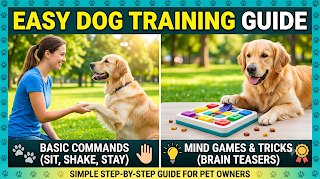
1. Understanding How Dogs Learn (The Simple Way!)
Dog training does not require complicated rules and guidelines. Simply put, dogs learn new behaviors through a simple link between an action and a consequence, where positive outcomes become desired (Pryor, 2019).
Modern vets suggest using positive reinforcement and ignore all the myths about avoiding rewarding your dog (AVSAB, 2021).
On the contrary, shouting and any other punishment will lead to adverse consequences (Ziv, 2017).
Introducing the Marker Word (“Yes!”)
Before you teach your dog any new command, you should introduce a marker word that will inform the animal that it did something right (Pryor, 2019).
It can be a simple word, such as “Yes!” or a mechanical sound from a handheld clicker.
To teach your dog the marker word, say “Yes!” in an excited tone and immediately give your dog a treat.
Repeat this dog training trick 15-20 times, and your dog will quickly learn that hearing the marker word is a good thing, as it brings a reward.
1. Easy Dog Training Commands for Beginners
1. Teaching “Sit” and “Down”
You can teach your dog to sit or lay down using the “food lure” method (Overall, 2013).
To teach your dog the “sit” command, hold a treat near your dog’s nose, move it over the dog’s head, and back toward the tail.
When the dog’s hindquarters lower as it follows the treat, say “Yes!” and reward the dog with a treat.
To teach the “down” position, begin with the dog sitting, move the treat from the nose to the floor in front of the dog’s paws, and slightly pull it back.
When the dog’s belly touches the floor, say “Yes!” and treat the dog.
2. Teaching the “Look at Me” Command
Sit quietly with a treat hidden in a closed hand held out at your dog’s side.
Your dog will begin to paw at your hand in an attempt to get the treat.
Ignore the dog and remain silent.
The moment the dog gives up on the hand and looks up at your eyes, say “Yes!” and give the dog a treat from the other hand.
After the dog learns to look up, add the “Look!” command before the dog makes eye contact with you.
3. The Emergency “Come” Recall
A “come” recall is critical to being able to bring your dog back to you if it runs out into the road.
First, practice this dog training command in a quiet room with a helper.
Have the helper hold your dog while you back away 5-10paces, crouch down, and call your dog’s name and the “Come!” command in an enthusiastic tone.
As soon as the helper’s grip is released and the dog comes to you, praise the dog and give it a jackpot of treats in sequence.
Always remember that the come command should not be linked to something your dog does not want to do, such as going to the veterinarian or a bath (Overall, 2013).
4. The “Be a Tree” Trick (Walking on a Loose Leash)
Dogs pull on the leash because they are eager to get wherever you are going.
Attach a leash to your dog’s collar or harness and start walking.
The moment the leash comes taut, stop immediately and stand like a tree.
Do not tug on the leash; simply maintain your position.
As soon as the dog backs up or moves around to relieve the tension, say “Yes!” and encourage the dog to return to your side before continuing the walk.
2. Self-Control Dog Training Exercises (Intermediate)
1. Teaching the “Stay” Command
Teaching the stay command involves three main aspects: distance, time, and distractions (Overall, 2013).
To begin teaching this dog training exercise, ask your dog to sit, hold out an open palm like a stop sign, and say “Stay!”
Wait for two seconds before saying “Yes!” while giving your dog a treat.
Continuously increase the time as soon as your dog becomes accustomed to sitting.
Once your dog can stay in place for 30 seconds, take one step back, move to the dog, say “Yes!” again, and give the dog a treat.
Always remember not to increase both distance and duration at the same time.
You should also teach your dog a release word, such as “Free!” to let the dog know it is permitted to stand.
2. Teaching the “Leave It” Command
Place a low-value piece of kibble in the closed fist and hold it out to the dog.
The dog will begin licking your hand, so you must stay quiet and keep your fist closed until the dog walks away or turns its head.
As soon as the dog is no longer paying attention to the treat in your fist, say “Yes!” and give the dog a high-value treat from the other hand.
Never give the dog the treat in your fist, as it did not obey the “Leave it” command!
3. Teaching the “Go to Your Bed” Command
Stand near your dog’s bed or a portable training mat.
Whenever your dog goes to the bed, say “Yes!” and throw a treat on the bed.
Then, ask the dog to lie down on the bed and slowly drop treats between the dog’s paws every couple of seconds.
This way, the dog will learn that going to its bed is a good thing, as it gets treats there.
3. Fun Mind Games To Teach Your Dog (Advanced)
1. The “Back Up” Trick
Walk toward the dog slowly in a hallway so that your body moves into the dog’s space, causing it to back up.
Say “Yes!” and throw a treat behind the dog as it moves backward.
You can also say the word “Back” as a command as the dog gets used to this trick.
2. The “Play Dead” Trick
Get your dog to lay down and use a treat lure to get the dog to roll onto its side.
Say “Yes!” and treat the dog for playing dead.
3. The “Spin and Twist” Trick
Hold a treat near the dog’s nose to get it to turn around your hand in a full circle.
Use the word “Spin” to indicate a clockwise turn and “Twist” for a counter-clockwise turn.
4. The “Leg Weaves” Trick
Stand with your legs spread apart and use a treat to lure the dog around your legs from behind in a figure-eight pattern, switching hands as needed.
4. Dog Training & Nutrition Tips (Secret Ingredient Revealed!)
🩺 Training and Nutrition Advice by Dr. RK Bloch, BVSc & AH, MVSc (Animal Nutrition)
“Always remember that any treats used for training are counted towards your dog’s daily ration!
Use low-fat and low-sugar commercial treats for training and avoid giving your dog table scraps.
Low-quality commercial treats full of sugar can increase the dog’s activity level for a short time and then cause it to become sleepy and tired during training.
Healthy and high-value treats may include small pieces of boiled chicken breast, dehydrated liver, or boiled chopped meat.
These treats can be given to the dog during training as they are small and can be eaten quickly by the dog.
High-value treats should not form more than 10% of the dog’s daily food allowance.
On the days when the dog is being trained, its other meals should be reduced.
Omega-3 fatty acids help improve a dog’s mental abilities, so it is important to feed your dog foods that contain these fatty acids to ensure attentive and focused training.”
5. Common Dog Training Issues and Solutions
Why Does My Dog Stop Paying Attention When I Do Not Have a Treat in My Hand?
This happens when you begin to use treats as bribes rather than rewards.
Always make sure to hide treats in a pocket or a pouch at the back.
At the beginning of the training, use an empty hand to direct your dog, then say the marker word and give your dog a treat when it completes an action.
What Should I Do When My Dog Gets Overexcited?
When your dog becomes overly aroused (jumping, excessive barking, and biting), it is time to stop the training session.
You can either turn around and walk away or take a short 2-minute break.
Lower the criteria and move to a quiet room to continue the training.
Reference List
American Veterinary Society of Animal Behavior. (2021). Position Statement on Humane Dog Training . AVSAB Official Guidelines.
Overall, K. L. (2013). Manual of clinical behavioural medicine for dogs and cats . Elsevier Health Sciences.
Pryor, K. (2019). Don’t shoot the dog!: The new art of teaching and training (3 rd ed.). Bantam Books.
Ziv, G. (2017). The effects of using aversive training methods in dogs-A review. Journal of Veterinary Behavior, 19 , 50-60.