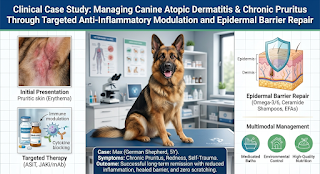
Canine Atopic Dermatitis (CAD) is a genetically predisposed inflammatory skin disease caused by allergic response to environmental allergens. The persistent scratching leads to skin lesions which in turn lead to a cycle of recurring dermatitis and infection.
The way to manage canine allergic dermatitis is by breaking the inflammatory cycle, reducing the itch and subsequent scratching, healing the skin, and repairing the barrier function of the skin.
1. Clinical presentation and history
An adult dog was presented with allergic dermatitis and scratching.
On examination, the following was noted:
Skin lesions: redness and warmth over groin, armpits, face, and paws.
Excoriations and lichenification: skin abrasions and thickened hyperpigmented areas due to persistent scratching and biting.
Inflammatory response: recurrent pruritus flares up after exposure to environmental allergens.
2. Diagnostic tests
Skin scrapings and impressions were taken to rule out mange, demodectic mange, flea allergy dermatitis, and fungal infections. After ruling out secondary causes, the dog was diagnosed with canine atopic dermatitis with concurrent skin inflammation.
3. Therapeutic reasoning
🩺 Commentary by the veterinarian on managing the allergic inflammation:
“Breaking the inflammatory cycle is the most crucial step in managing dogs with allergic dermatitis. Once the dog scratches, damaged skin cells send pro-inflammatory cytokines and signals down the sensory nerves that make the dog itch more. Instead of using old-fashioned and toxic steroids to quell the itching, modern treatments can selectively target the itch pathway. The combination of the JAK-1 kinase inhibitor Oclacitinib and the IL-31 specific antibody Lokivetmab suppresses the itch and inflammation. Anti-inflammatory fatty acids reduce the redness and soothe the skin allowing it to heal.”
4. Therapeutic intervention
1. Targeted therapy for inflammatory pruritus
Oclacitinib (JAK-1 inhibitor)
Days 1 to 14: give one tablet (16 mg) twice a day after food or with food.
Day 15 onwards: give one tablet (16 mg) once a day.
This medication works by inhibiting JAK-1 proteins that are responsible for transmitting the itch signals and inflammation.
Lokivetmab (IL-31 monoclonal antibody)
Give one 25 mg subcutaneous injection every 28 days for three times.
The antibody stops the action of pro-inflammatory cytokine IL-31 which is responsible for neuro-inflammation and itch. The Lokivetmab has an excellent safety profile since it does not require the liver or kidneys to metabolize.
2. Prostaglandin pathway modulation
Omega-3 and Omega-6 essential fatty acid supplements
The eicosapentaenoic acid (EPA) in these supplements inhibits the production of pro-inflammatory compounds called prostaglandins. This decreases inflammation and pain throughout the body while promoting the production of anti-inflammatory mediators.
3. Topical intervention for irritation
Antiseptic and soothing shampoo
Apply this medicated shampoo every two weeks for three weeks.
Wet the coat and apply the shampoo over the affected areas (armpits, groin, paws, and underbelly). Massage it into the skin, allow it to stay for ten minutes, and then rinse.
This helps reduce the number of bacteria and yeast on the skin while also removing the trapped pollen and allergens from the fur.
Hydration
The dog should have access to plenty of water to maintain skin integrity and promote healing of the skin lesions.
4. Allergen-specific immunotherapy (ASIT)
Desensitization drops or injections to help the dog develop tolerance to environmental allergens.
5. Environmental control measures
Washing the dog’s bedding in hot water to remove allergens and dust mites.
Use a damp towel to wipe the dog’s paws, belly, and legs after walks to remove surface-level pollens.
5. Outcome
The targeted therapy worked to suppress the inflammatory response almost immediately after administration. Within 24 to 48 hours, the dog showed less redness, warmth, and scratching. The dog also stopped biting its skin after three days of medication. The essential fatty acids promote the long-term healing of the skin and prevent further irritation.
VETERINARY CLINICAL PRESCRIPTION
Date: April 18, 2026
Patient name: Rudolph
Species/Breed: Canine/German shepherd
Age: 2 years
Sex: Male, neutered
Weight: 35 kg
Diagnosis: Canine Atopic Dermatitis with secondary superficial bacterial pyoderma
Rx (Treatment)
1. Targeted anti-pruritus therapy
Tablet oclacitinib (16 mg)
Day 1 to 14: 1 tablet every 12 hours (2 tablets per day)
Day 15 onwards: 1 tablet per day
Purpose: To block IL-31 and stop the itch and subsequent skin damage.
2. Treatment for secondary superficial bacterial pyoderma
Tablet cephapodoxime proxetil (200 mg)
1 tablet per day every 24 hours for 14 days
Purpose: This is a cephalosporin antibiotic to treat the secondary superficial bacterial folliculitis due to scratching. Finish the course even if the skin appears to be healing after five days.
3. Topical anti-microbial therapy
Chlorhexidine gluconate 3% + Miconazole nitrate med shampoo
Purpose: To reduce the number of bacteria and yeast while also washing away the trapped pollens from the fur.
Apply the shampoo twice a week for three weeks.
Procedure: Wet the coat and apply the shampoo generously on the affected areas (armpits, groin, paws, and underbelly). Leave it on for ten minutes and then rinse well.
4. Epidermal barrier support
High concentration omega-3 liquid supplement
Mix 8 ml in the morning feed once daily.
Purpose: To supply the skin with lipids to restore the skin barrier function and reduce the production of pro-inflammatory prostaglandins.
Patient counseling
Wipe the dog’s paws and belly with a damp towel after walks to remove grass and pollen allergens.
Wash the dog’s bedding in hot water weekly to remove allergens and dust mites.
Use a cone to prevent the dog from licking and biting the affected areas.
Follow-up
Come back in two weeks for a skin cytology check before reducing the anti-itch medication dosage.