Hypocalcemia With High Fever (105°F) in Pregnant Dairy Cattle
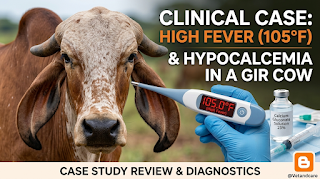
Hypocalcemia and high fever

I was called to treat an adult cow that was about 7-8 years old, six to seven months pregnant, and had a daily yield of 4-5 liters of milk leads to feel some Hypocalcemia symptoms. Upon arrival, I could see that the cow was panting severely and had a high fever. In addition, there was … Read more

Clinical Case Study: Bovine Ketosis (Acetonemia) in High-Yielding Dairy Cattle

Bovine Ketosis (Acetonemia) is a significant metabolic disease, which commonly affects high-yielding dairy cows and buffaloes, particularly during the first months of lactation. Contrary to numerous infectious and contagious diseases, ketosis is non-infectious and non-contagious. It develops due to a severe negative energy balance (NEB) similar to Hypocalcemia (Milk fever) caused by calcium deficiency or … Read more

Clinical Case Study: Bovine Milk Fever (Acute Hypocalcemia)

Milk Fever (Parturient Paresis) is an acute to subacute metabolic emergency in high-yielding dairy cattle characterized by severe hypocalcemia, generalized muscle weakness, loss of consciousness, and sternal to lateral recumbency. While acute hypocalcemia occurring within 72 hours post-calving during heavy colostrum synthesis is strictly termed Milk Fever, serum calcium depletions occurring during mid-gestation or late … Read more

Pregnancy Toxemia In Goats

Pregnancy Toxemia, more commonly known as Ketosis, or Twin Lamb Disease (in small ruminants) is a metabolic disease affecting pregnant females during the last trimesters of pregnancy. Negative Energy Balance (NEB) is the underlying mechanism, which makes pregnancy toxemia prevalent mostly among high-yielding females carrying twins, triplets or quadruplets. Whereas in dairy cattle ketosis is … Read more